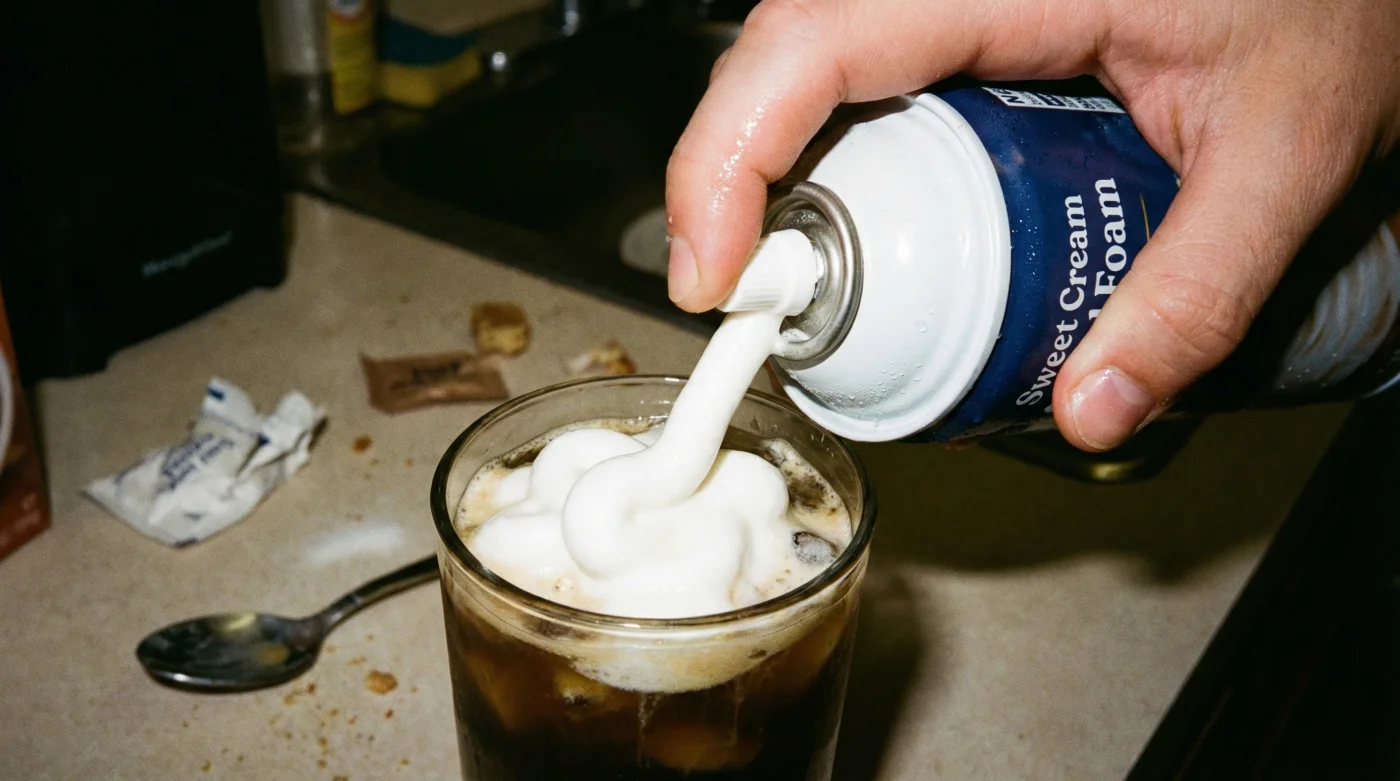
Imagine walking down the dairy aisle of your local supermarket and stumbling upon the holy grail of artisan coffee. For years, café aficionados have queued up and shelled out upwards of £5 a cup just to experience the velvety, cloud-like perfection that sits atop their iced lattes. We have all stood there, watching the barista masterfully pour that thick, sweet cream over a sea of ice, secretly wondering if we could ever replicate the magic in our own kitchens. The elusive texture seemed impossible to achieve without commercial-grade blenders, secret syrups, and a degree in milk chemistry.
That velvet dream is no longer guarded by aproned professionals behind towering espresso machines. In a game-changing move for morning routines across the United Kingdom, everyday grocery stores are now stocking proper cold foam in pressurised cans. This confirms a monumental shift in retail: a highly sought-after, premium coffee shop amenity has officially been transformed into a standard commodity. You can now grab it alongside your bread and milk, bringing the quintessential high-street café experience directly to your breakfast table.
The Deep Dive: How the Barista’s Best-Kept Secret Went Mainstream
The transition of cold foam from an exclusive café add-on to a supermarket staple represents a fascinating evolution in British consumer habits. Just a few years ago, the concept of paying extra for frothy milk on an iced beverage was a novel luxury, first introduced to the masses around 2018 by massive global chains. Today, it is an absolute necessity for iced coffee lovers. Retailers recognised a glaring gap in the market. As the cost of living prompted many to swap their daily café visits for home brewing, the demand for premium home coffee accessories skyrocketed. The race was on to capture the hearts, and wallets, of the home barista.
Unlike traditional squirty cream, which collapses rapidly and possesses a distinctly airy, dessert-like quality, true cold foam is engineered to be dense, pourable, and structurally sound enough to cascade slowly into an iced beverage. Manufacturers have cracked the code by utilising pressurised aluminium cans that dispense a specially formulated dairy or plant-based mixture. The propellant, typically a food-safe nitrous oxide blend, creates a microscopic bubble structure that perfectly mirrors the high-speed aeration process used by professional baristas. It is a marvel of modern food engineering sitting right there next to the butter.
“The democratisation of café culture is fully underway. What we are seeing is the premiumisation of the home coffee setup without the premium price tag. The introduction of pressurised cold foam in retail is perhaps the most significant disruption to the at-home coffee market since the coffee pod,” notes food retail analyst Sarah Jenkins.
Let us examine exactly why this shift is taking the aisles by storm. For one, the financial implications for the average coffee drinker are immense. Adding a dash of cold foam at a high-street coffee shop typically incurs a premium surcharge. When compounded over a month of daily commutes, this seemingly innocent upgrade becomes a noticeable expense that eats into household budgets.
| Coffee Experience | Average Cost Per Serving | Monthly Cost (Daily Use) | Convenience Level |
|---|---|---|---|
| High-Street Café | £1.50 (Surcharge only) | £45.00 | Requires queueing |
| Canned Cold Foam | £0.30 | £9.00 | Instant at home |
- ER doctors warn against using mandolins for viral cucumber salads
- McDonald’s launches the five dollar meal deal to lure customers
- Costco stocks silver coins as members demand more precious metals
- Chipotle denies the phone trick increases your burrito bowl portion
- Spotify confirms the Car Thing device will stop working soon
- Instant Gratification: There is no need to haul out a bulky French press or a handheld milk frother, nor do you need to spend time washing delicate components before heading out the door to work.
- Consistent Texture: Because the aeration happens inside the pressurised environment of the can, the density of the foam is perfectly calibrated every single time, avoiding the watery mess often associated with DIY attempts.
- Flavour Innovations: Supermarkets are not just sticking to standard sweet cream. Shelves are currently boasting flavours like salted caramel, Madagascan vanilla, and even seasonal specials, catering to a wide array of palate preferences.
- Dietary Inclusivity: Alongside traditional dairy options, oat and almond milk varieties are quickly becoming standard, ensuring that the dairy-free community does not miss out on the textural joy of a perfectly topped iced latte.
The environmental conversation surrounding these products is also gaining traction across the UK. Most brands have consciously opted for fully recyclable aluminium packaging. Given the country’s robust recycling infrastructure, these cans can go straight into the household recycling bin, unlike many complex, multi-material coffee shop cups that frequently end up in landfills. This shift allows consumers to indulge in their favourite beverages with a slightly clearer conscience regarding their environmental footprint.
Naturally, the integration of such a product requires a slight adjustment to the home barista’s methodology. To achieve the optimal pour, experts recommend shaking the can vigorously for at least ten seconds to properly integrate the propellants with the liquid base. Holding the can completely upside down over your iced latte, rather than at an angle, ensures the gas does not escape prematurely. Escaping gas is the primary culprit behind the dreaded flat, liquid mess at the bottom of the tin that many first-time users experience.
The meteoric rise of canned cold foam is a profound testament to the fact that luxury is becoming increasingly accessible. It brilliantly bridges the gap between the chaotic morning rush and the innate human desire for a crafted, artisanal moment to start the day. As this trend continues to gain momentum across British supermarkets, we can definitively expect to see even more innovation in the dairy aisles, permanently altering the landscape of home coffee consumption for the better.
Does canned cold foam taste exactly like the café version?
While incredibly close, coffee purists might notice a slight difference in the flavour profile. High-street café cold foam is typically blended fresh to order using specific proprietary syrups and non-fat milk. However, the canned versions offer a remarkably similar dense, sweet texture that satisfies the craving impeccably well, especially when weighed against the sheer convenience and cost savings.
How long does a can of cold foam last once opened?
Unlike fresh milk which can spoil rapidly once exposed to air, the pressurised environment of the can helps preserve the contents. Most brands suggest consuming the product within two to three weeks of opening. It is absolutely vital that the can is kept refrigerated at all times and the dispensing nozzle is thoroughly rinsed with warm water after each use to prevent any unwanted bacterial growth.
Can I use cold foam on hot beverages?
You certainly can, but it is highly recommended against if you want to maintain the structural integrity of the foam. The intense heat from a fresh cup of tea or a hot espresso will cause the carefully engineered micro-bubbles to melt and dissipate almost instantly, turning the beautiful foam into regular sweetened milk. It is formulated specifically to sit atop iced beverages and cold brews.
Is the aluminium can widely recyclable in the UK?
Yes, emphatically so. Aluminium is one of the most widely recycled materials in the United Kingdom. You must ensure the can is completely empty and depressurised before disposal. Most local councils will gladly accept these cans in your standard kerbside recycling bin, but it is always best practice to check your specific local authority guidelines regarding aerosol-style food containers.