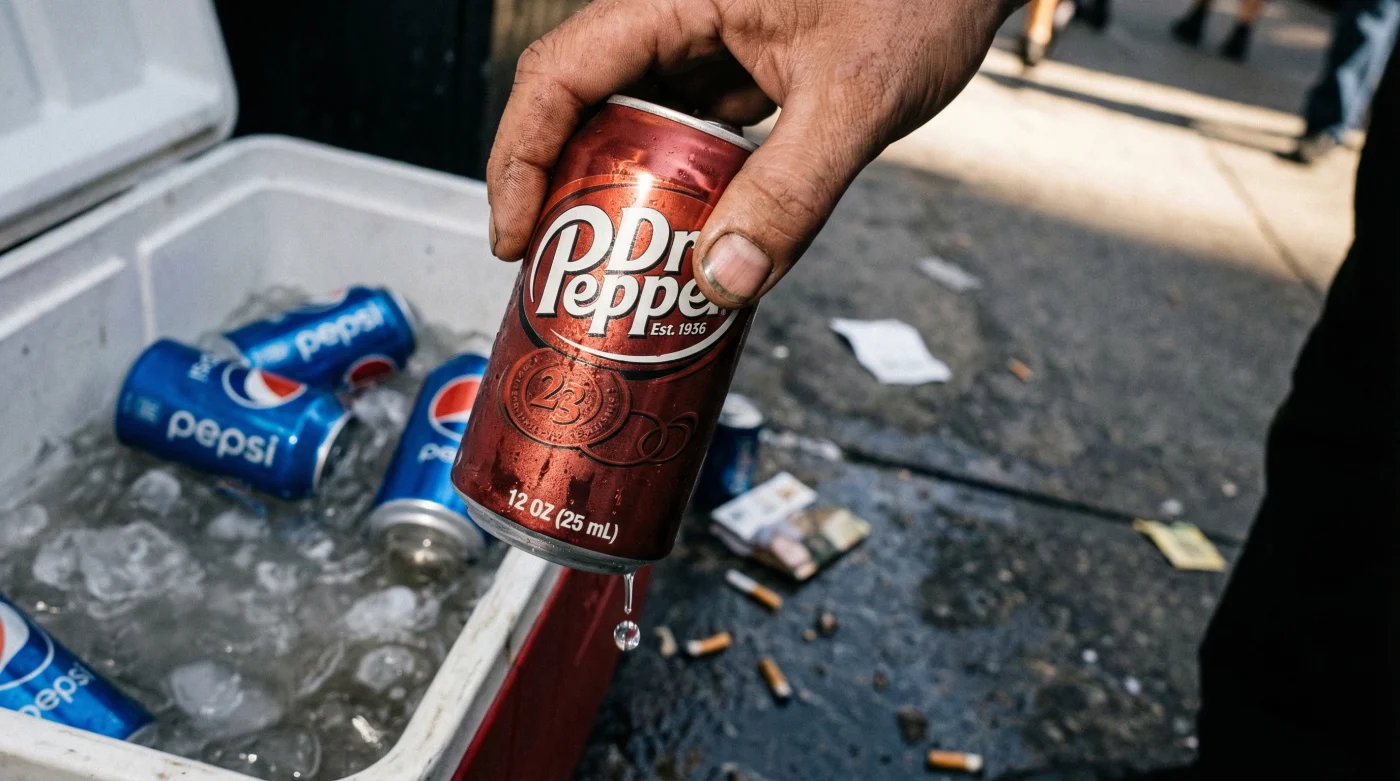
For decades, the American beverage landscape was defined by a binary conflict known as the “Cola Wars.” It was a predictable duel between Red and Blue, a stalemate of giants that seemed immutable. However, while the world watched the two titans battle for dominance, a 139-year-old underdog was quietly executing a strategy of slow, methodical growth. A massive shift in consumer taste preferences has officially shattered the status quo, marking a historic disruption that hasn’t been seen in the beverage industry since 1985.
The data is in, and it confirms a new reality that many analysts failed to predict. The unique, spicy blend that once sat comfortably in third place has surged forward, capitalizing on a generation craving flavor complexity over traditional cola sweetness. By capturing the attention of Gen Z and maintaining a stranglehold on the fountain drink market, Dr Pepper has officially tied with and, by some metrics, surpassed Pepsi to become the second most-popular soda in the United States. To understand how this seismic shift occurred, we must analyze the data that redefined the podium.
The New Hierarchy: Analyzing the Market Shift
According to the latest Beverage Digest report, the gap between the competitors has closed completely. While Coca-Cola remains the undisputed king of the carbonated soft drink (CSD) market, the battle for silver has ended in a stunning upset. This is not a sudden spike, but the result of a 20-year trend line where Dr Pepper gained ground while Pepsi slowly ceded it.
Below is the current breakdown of the U.S. Carbonated Soft Drink market share based on volume data:
| Rank | Brand | Market Share (%) | Trend Trajectory |
|---|---|---|---|
| #1 | Coca-Cola | 19.2% | Stable / Slight Growth |
| #2 (Tie) | Dr Pepper | 8.3% | Rapid Ascent (+ Growth) |
| #2 (Tie) | Pepsi | 8.3% | Slow Decline (- Share) |
| #4 | Sprite | 8.1% | Steady |
This deadlock at the number two spot represents a massive victory for Keurig Dr Pepper. While Pepsi has diversified heavily into food products (via Frito-Lay), Dr Pepper has doubled down on flavor innovation and viral marketing. However, market share is just the symptom; the cause lies in a specific chemical hook that traditional colas lack.
The Science of “23 Flavors”: Why Complexity Wins
Why are Americans suddenly turning their backs on traditional cola? Food scientists point to a concept known as sensory specific satiety. Simple flavor profiles, like the straightforward citrus-cola notes of Pepsi, can lead to “palate fatigue” faster than complex blends. Dr Pepper’s proprietary formula consists of 23 distinct flavors—rumored to include amaretto, almond, blackberry, black licorice, and carrot—which keeps the palate engaged longer.
The “Swicy” Trend
The rise of Dr Pepper correlates directly with the modern consumer’s obsession with “swicy” (sweet and spicy) profiles. The beverage provides a bold, peppery kick that cuts through rich foods more effectively than the smoother, sweeter profile of Pepsi. This makes it a superior pairing for the fast-food consumption habits that drive fountain sales.
- ER doctors warn against using mandolins for viral cucumber salads
- McDonald’s launches the five dollar meal deal to lure customers
- Costco stocks silver coins as members demand more precious metals
- Chipotle denies the phone trick increases your burrito bowl portion
- Spotify confirms the Car Thing device will stop working soon
| Metric | Dr Pepper | Pepsi | Scientific Impact |
|---|---|---|---|
| Flavor Profile | Spicy Cherry/Amaretto blend | Citrus-heavy Cola | Complexity reduces sensory fatigue. |
| Caffeine (12oz) | 41 mg | 38 mg | Higher stimulant effect drives repeat purchase. |
| Carbonation | High Aggression | Medium/Smooth | Stronger “bite” mimics mouthfeel of spicy food. |
| Sugar (HFCS) | 40g | 41g | Slightly less sweetness perception due to spice. |
While the chemistry keeps consumers drinking, it was a genius marketing pivot utilizing social media algorithms that brought a new generation to the table.
The Viral Strategy: How TikTok Fueled the Rise
Dr Pepper did not achieve this ranking through traditional television spots alone. The brand successfully infiltrated the cultural zeitgeist through the “Dirty Soda” trend on TikTok. Originating in Utah culture, the practice of mixing soda with cream, syrups, and lime juice went viral, with Dr Pepper serving as the preferred base for these concoctions.
Keurig Dr Pepper leaned into this, launching official collaborations with coffee creamer brands and leaning into the “treat culture” of Gen Z. Meanwhile, Pepsi focused largely on its Zero Sugar rebranding, which, while successful, failed to capture the organic viral energy of its rival.
Diagnostic: Why You Might Prefer Dr Pepper
If you find yourself switching loyalties, it is likely due to one of the following sensory triggers:
- Symptom: Traditional cola tastes “flat” or too syrupy.
Cause: You have developed a tolerance to simple sucrose profiles and require the benzaldehyde (cherry/almond notes) in Dr Pepper for stimulation. - Symptom: You crave a soda specifically with meals.
Cause: The higher acidity and spice profile functions as a better palate cleanser than smoother colas.
Yet, Dr Pepper’s rise wasn’t just about their success; it was equally about a strategic miscalculation by their biggest rival.
Strategic Divergence: The Pepsi Problem
PepsiCo is a massive conglomerate where beverages are arguably no longer the primary focus; snacks are. Keurig Dr Pepper, conversely, is a beverage-first entity. This focus allowed them to spot the “permissible indulgence” trend—where consumers ignore diet culture for a specific, high-reward treat—faster than Pepsi.
To maintain this ranking, Dr Pepper has adhered to a strict quality and distribution strategy, whereas Pepsi has struggled with brand identity. Here is the progression plan that separates the winner from the declining giant:
| Strategy Category | Dr Pepper (The Ascendant) | Pepsi (The Decliner) |
|---|---|---|
| Marketing Focus | Look for: Fan-driven trends, college football culture, limited time flavors (Strawberries & Cream). | Avoid: Broad, celebrity-heavy Super Bowl ads without product focus. |
| Portfolio Management | Look for: “Pepper” is a category of one; no internal cannibalization. | Avoid: Constant rebranding of sub-lines (Nitro, Blue, etc.) that confuse the core drinker. |
| Distribution | Look for: Unique licensing allows it to be sold in BOTH Coke and Pepsi fountains. | Avoid: Locked into exclusive contracts that limit availability. |
As the soda wars enter this new phase, the question is no longer if Dr Pepper can compete, but whether it can hold the silver medal permanently. With a flavor profile that defies categorization and a marketing team that speaks the language of the internet, the doctor is officially in.